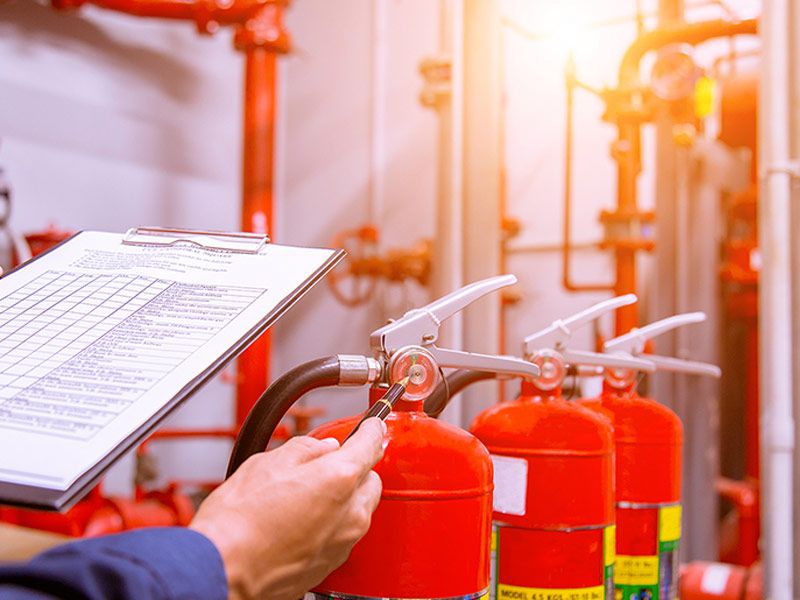
Types of Fire Extinguishers and What Fires They Should Be Used For
Choosing the correct fire extinguisher is critical. Using the wrong extinguisher can make a fire worse or create a serious safety risk.
🟥 Water Fire Extinguisher
Colour Band: Red
Suitable for:
- Class A Fires
- Wood
- Paper
- Cardboard
- Textiles
- Rubbish
Do NOT use on:
- Electrical fires
- Flammable liquids
- Cooking oils and fats
- Gas fires
Common Locations:
Schools, offices, warehouses and public buildings.
🟨 Foam Fire Extinguisher (AFFF)
Colour Band: Blue
Suitable for:
- Class A Fires
- Class B Fires
- Petrol
- Diesel
- Paints
- Solvents
Do NOT use on:
- Cooking oils and fats
- Gas fires
Common Locations:
Workshops, service stations, factories and commercial premises.
🟨 Wet Chemical Fire Extinguisher
Colour Band: Oatmeal
Suitable for:
- Class F Fires
- Cooking oils
- Deep fryers
- Commercial kitchens
Also effective on:
- Class A Fires
Do NOT use on:
- Flammable liquids
- Gas fires
Common Locations:
Restaurants, cafés, food vans and commercial kitchens.
🟦 Dry Chemical Powder (ABE) Fire Extinguisher
Colour Band: White
Suitable for:
- Class A Fires
- Class B Fires
- Class E Fires
- Energised electrical equipment
Do NOT use on:
- Cooking oils and fats
Common Locations:
Vehicles, boats, workshops, factories, retail stores and general commercial buildings.
Most common extinguisher found in Australia.
🟦 Dry Chemical Powder (BE) Fire Extinguisher
Colour Band: White
Suitable for:
- Class B Fires
- Class E Fires
Do NOT use on:
- Class A combustible materials
- Cooking oils and fats
Common Locations:
Fuel storage areas and industrial applications.
⬛ Carbon Dioxide (CO₂) Fire Extinguisher
Colour Band: Black
Suitable for:
- Class B Fires
- Class E Fires
Ideal for:
- Switchboards
- Computers
- Electrical equipment
- Server rooms
Advantages:
- Leaves no residue
- Non-conductive
- Minimises damage to electronics
Do NOT use on:
- Cooking oils and fats
- Outdoor fires where wind may disperse the agent
Fire Classes Explained
| Fire Class | Fuel Source |
|---|---|
| Class A | Wood, paper, cardboard, plastics, textiles |
| Class B | Petrol, diesel, paints, solvents, flammable liquids |
| Class C | Flammable gases such as LPG and propane |
| Class E | Energised electrical equipment |
| Class F | Cooking oils and fats |
NEFPS Safety Tip
Always use the correct extinguisher for the type of fire. Using water on an electrical or cooking oil fire can cause serious injury and spread the fire. If in doubt, evacuate immediately, call Triple Zero (000), and only attempt to fight a fire if it is safe to do so.
North East Fire Protection Services (NEFPS) supplies, installs, tests and maintains water, foam, wet chemical, dry chemical powder and carbon dioxide fire extinguishers throughout Bright, Mount Hotham, Dinner Plain, Myrtleford, Beechworth, Wangaratta and surrounding Alpine communities.